

If you’re just stepping into the massive open-world in Crimson Desert, it’s easy to be confused by the variety of systems, skills, and combat intricacies. Luckily, combat is so much easier once you understand how to prepare, defend, and overwhelm your opponents with powerful skills and perfectly timed combo attacks.
We’ll walk you through the basics of combat and teach you how to get good at fighting in Crimson Desert with some key tips. Get your shield ready, pick your favorite weapon, and get ready to use a variety of skills at your disposal to master this complex combat system.
What Are The Basics Of Combat?
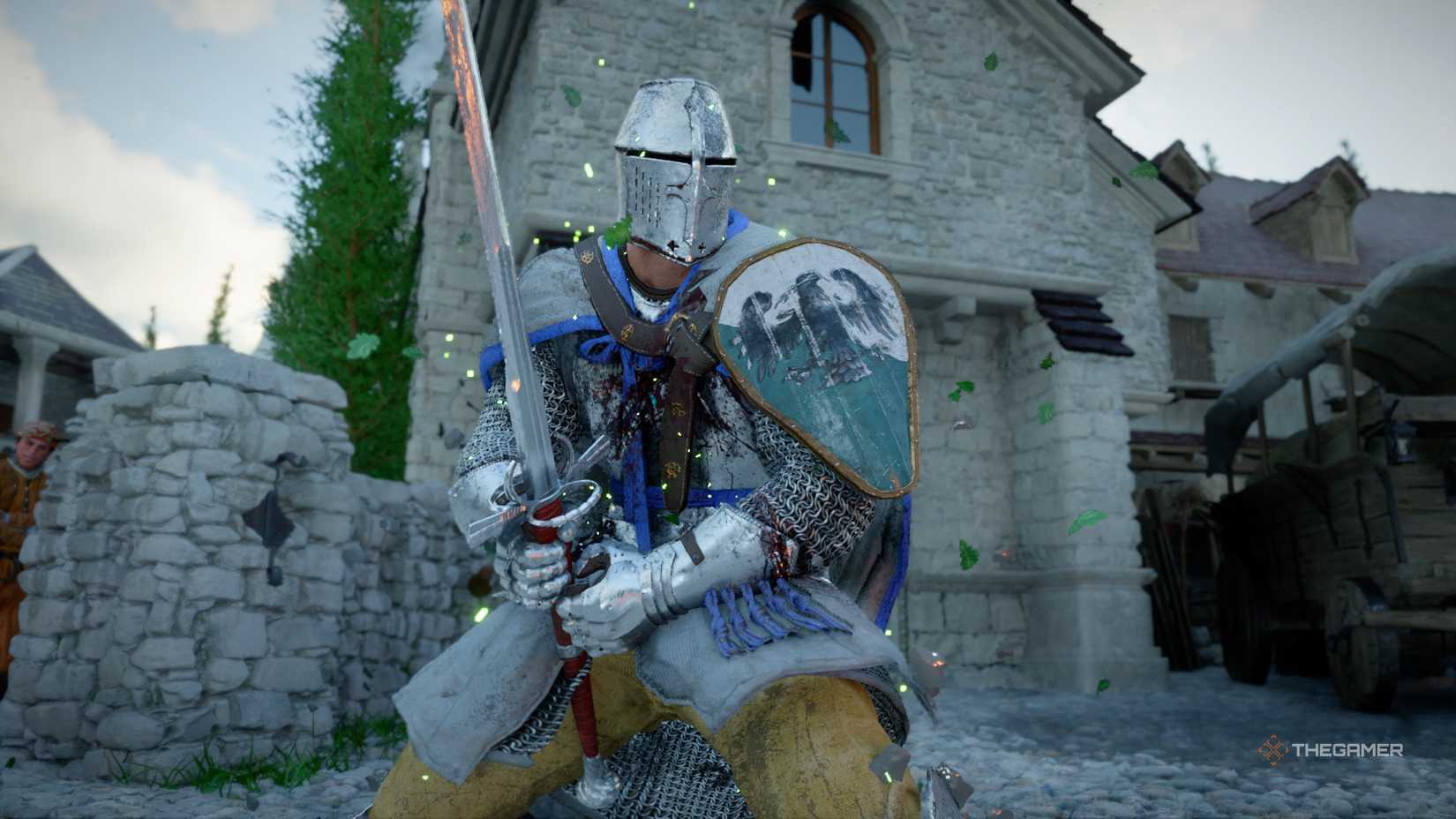
The best way to successfully master Crimson Dawn’s complex combat is to come prepared with the right knowledge, skills, and equipment you’ll need to gain the upper hand on your enemies.

One of the most important aspects of combat in Crimson Dawn is using the best gear available to you.
Even if you don’t have the money to buy better weapons, upgrading your armor and weapons at the Smithy is essential to success, especially after Chapter Four.
Gather materials and Abyss Relics as you adventure through Pywel to ensure you can keep your gear up to snuff. Head to Turnali in Hernand when you’re ready to upgrade your items.
If you advance too far without taking a moment to upgrade your gear, then you’re absolutely going to have a bad time.
How To Parry And Dodge

Two of the most basic and important skills to learn are how to parry and dodge. These are essential for avoiding damage, which is key to survival in tougher fights or against groups of enemies.
- Press LB/L1 right before an enemy attack hits to parry it.
- Press B/Circle to dodge enemy attacks.
Dodging and parrying, like all combat actions, cost Stamina.
Watch your Stamina meter at all times to ensure it doesn’t run out and leave you vulnerable to attacks.
Alternatively, the Keen Senses skill gives you the option to counter an enemy attack by attacking right before you’re hit.
Focus on parrying and dodging early on and make it an essential tool in your arsenal, as the best way to stay alive and conserve healing items is by not getting hit at all.

Crimson Desert Is Seemingly Riddled With AI-Generated Assets
Ah, here we go again.
What Are The Best Combat Tips?

Now that your equipment is upgraded, and you know how to survive, you can focus on the fun part of combat: attacking your opponents with everything you have. There are four major tools at your disposal in combat:
- Skills
- Melee Weapons
- Ranged Weapons
- The Environment
Your skills are essential to advanced combat techniques, and learning their pros, cons, effects, and when to use them requires effort.
Weave Skills Between Attacks
Skills are best used in tandem with other attacks to keep your opponents off-guard and on the defensive.
One of the most basic yet essential skills to employ is Force Palm, which can knock enemies back and lower their defense. Here’s an example of how to use Force Palm:
- Wait for an aggressive enemy to prepare an attack, or carefully approach a defensive enemy.
- Observe their attack patterns and how long their attack windups take before connecting.
- Time your Force Palm (R3/Right Stick Click), so that you interrupt your foe’s attack, or break their guard when close.
- Follow up with a basic attack (RB/R1), or unleash a devastating heavy attack (RT+RB/R1+R2) while the enemy’s defense is lowered.
Using Force Palm is a massive help for early-game combat, and remains a necessary skill throughout your journey.
Other skills, like Nature’s Snare, offer alternatives to more basic skills, such as parrying. Experiment with skills to decide which works best for you and your playstyle.
Switch Between Melee And Range

Melee combat is the default way to engage adversaries in Crimson Desert, but weaving ranged attacks into combat is the best way to keep foes on their heels and deal damage with minimal risk.
When you knock an opponent far away, or they jump back to create some breathing room, hold LT/L2 to draw your bow and release to fire an arrow.
This trick offers essentially free damage and will give you the edge over foes who are either using ranged weapons of their own or are temporarily out of reach.
Don’t forget you also have access to secondary weapons:
- Spears
- Two-handed Swords
- Longswords
Kliff requires the Quick Swap Skill under the Armed Combat skill tree to easily switch between secondary weapons.
Damiane and Oongka do not need this skill, so they can swap on demand from the start.
General Tips

With these key tenets mastered, you’re ready to take on any challenge in Crimson Desert, but there are a few more tips to keep in mind.
- Stamina is key. Boost your Stamina using Abyss Artifacts.
- Reinforcing weapons and armor is temporary and should be done before harder battles or boss fights.
- Socketing upgrades using Abyss Cores offer permanent boosts, so feel free to use this feature as you see fit.
- Prioritize leveling up your Armed Combat as much as possible from the start.
-
Parrying (LB/L1) is perhaps the most important skill to master for both offensive and defensive purposes.
- A successful parry also replenishes your Stamina and Spirit.
-
Each character boasts unique weapons and skills to learn and use; adapt your combat style to each.
- Kliff excels at blending swords and bows while being evasive.
- Damiane focuses on aggression and rapid attacks.
- Oongka offers devastating AoE skills and a powerful ranged weapon that can hit multiple enemies.
- Stay in Third Person during combat, as the first-person perspective can be disorienting, especially when dealing with large groups.
-
Prepare to readjust your camera a lot.
- Keep your opponents in the center of the screen as much as you can, so you know when they’re about to attack and when to dodge or parry.
Ultimately, you can tailor your experience to fit your preferred combat style, but following these essential combat tips will help you slice through most encounters in the game.

Spoiler-Free 150 Hour Crimson Desert Review – A Deeply Flawed Diamond
The greatest videogame world I’ve ever seen is let down by tedium and minor frustrations that build up over the course of dozens of hours.