

Trading card games come in all shapes and sizes, but most look to appeal to two primary needs of players: are the cards highly collectible, and is the gameplay fun? Whether you’re a long-time Magic: The Gathering or Pokémon player who may be looking for something new to try out, or you’re completely new to TCGs and want to know where to start, our list has something for everyone.
Card art quality, collectibility, gameplay, and longevity are all deciding factors in where each game has ended up on our list, and we’ve even got a bold entry for a game that technically isn’t out yet.
In compiling this list, we aim to highlight all the key features of each game so that you can tell whether they’re going to meet your needs, and you may find that our number three pick is actually your number one; it’s all subjective!
10
Star Wars Unlimited
Stuck On The Launch Pad
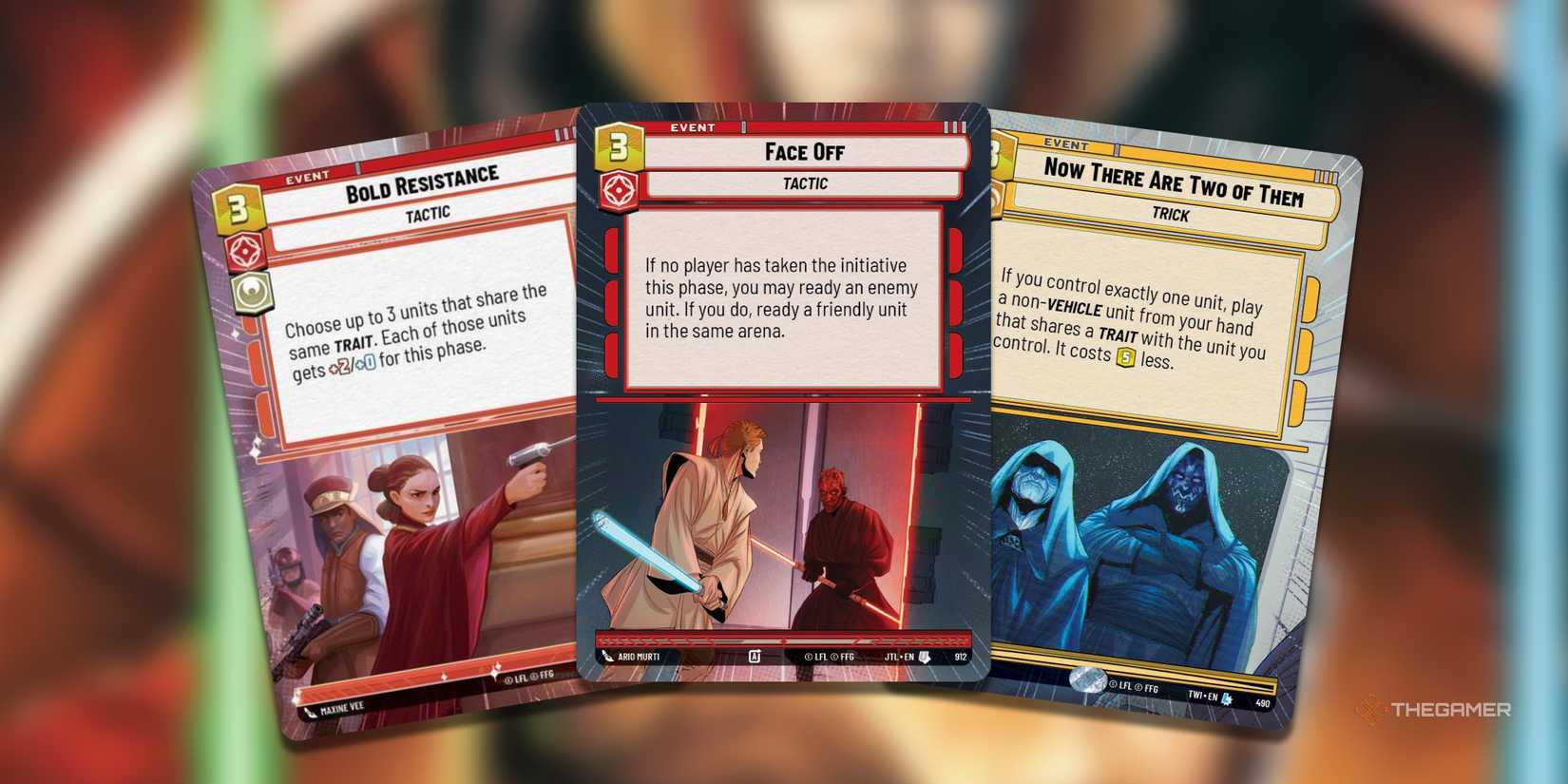
For a game that uses the Star Wars license, Unlimited is a game that has really struggled to make much of an impact on the TCG scene as a whole since it launched in 2024.
Granted, its short run works in its favor right now, as there is still time to review the collectibility and gameplay mechanics and find ways to make the game appeal to a wider audience before it gets too late.
Star Wars Unlimited has now been around for about half as long as its dice-based predecessor, Star Wars Destiny, and while it feels like Unlimited has a bigger ceiling, it’s just not connecting with fans the same way other TCGs can.
By the end of 2026, there will have only been nine Star Wars Unlimited sets released, compared to 16 MTG sets in the same window.
The best way to describe its gameplay is MOBA-like, with your objective being to destroy your enemy’s base through the tactical deployment of units, upgrades, and event cards. In a unique twist, the battlefield is split in two, with ground units and space units kept on different sides of your base.
Pros
- Huge pool of iconic material to pull from.
- A slower set release schedule means lower investment needed.
Cons
- Messy game layout.
- The default format is two-out-of-three rounds.
- Artwork isn’t nearly as varied as it could be.
9
One Piece
One To Watch

In an odd twist, the collectibility of One Piece is arguably its biggest downfall, as it’s become an issue for the singles market, and sealed product has been a nightmare to get a hold of, especially for MSRP.
Gameplay-wise, One Piece is a mashup of Magic, Pokémon, and Yu-Gi-Oh, and that means it’s somewhat disappointing, because it doesn’t really bring anything new to the table.
If the market falls under control and future expansions can further develop the game mechanics to add a little more originality, then the One Piece TCG could shoot up this list in years to come, as the support is already well established.
Pros
- Great artwork across all variants.
- Huge surge in popularity should boost ongoing support.
Cons
- Too many cards with inflated prices are harming the overall market.
- Gameplay is a mix of other games, with little originality.
8
Flesh And Blood
Crowded Out

Despite a commitment to in-person play and a simplified approach to gameplay, Flesh and Blood continues to be a game that exists on the periphery of the top card games.
Its low position on this list isn’t an indictment on the quality of the game, but more a statement that it’s still too far behind those higher on the list.
Flesh and Blood sees players take each other on with just a single champion, using gear and abilities to attack and defend until one player is left standing.
This stripped-back approach actually makes Flesh and Blood far easier to pick up and learn compared to Magic: The Gathering and even Disney Lorcana. Beyond this, it has limited collectibility compared to other games on this list, and the simplified gameplay actually means there’s very little incentive to keep buying new sets unless you’re into the competitive scene.
Pros
- Super simple to learn.
- Class system makes deck building easy.
- Sets tend to follow a theme artistically.
Cons
- Limited collectibility/card variants.
- Simple gameplay hampers investment in new sets.
- No official digital platform and likely never will be.
7
Cyberpunk TCG
A Dark Horse With Big Backing

It might be considered a little controversial to have an unreleased TCG on the list at anything other than the last spot, but the Cyberpunk TCG is playable for free in an alpha state, and what we’ve seen so far, mixed with its record-breaking Kickstarter, shows that it will be a force to be reckoned with before the year is done.
This TCG takes some inspiration from other card games like Lorcana, but the gig system is unique and shows that it won’t just be a lazy, cookie-cutter card game that’s just exploiting a licensed property.
The first set will be out in 2026, following the completion of the Kickstarter, with an expansion already penciled in for Q1 2027. If this product is executed half as well as the Kickstarter suggests it will be, then the Cyberpunk TCG has a genuine chance at infiltrating the upper echelon of TCGs and causing some major disruption.
Pros
- Huge backing on Kickstarter shows strong early support.
- Free alpha decks can be downloaded and played with.
- The gig system is unique but well-designed.
Cons
- Early access is limited to Kickstarter backers.
- Cyberpunk IP can be hit or miss, and the future set planning in the pre-release phase is a concern.
6
Gundam Card Game
Short And Sweet

The Gundam card game is super simple to pick up and learn, although it does nothing revolutionary; this simplicity is somewhat balanced out by the stunning card designs, which are highly collectible for fans. Even as someone with no attachment to the franchise, I have to admit the card designs are some of the best on the market.
Better still, the products are so reasonably priced, and you can even grab premium bundles that come with alt-art cards and mini Gundam figures for you to assemble.
As an all-around package, Gundam is doing exceptionally well for a card game that only launched in mid-2025. The most telling sign of its quality will be whether it can appeal to those outside of the Gundam fanbase, or whether it wilts away if it fails to sustain its strong start.
Pros
- Stunning card art.
- Great range of products.
- Affordable pricing.
Cons
- Niche license.
- Still in early stages of life/development.
5
Riftbound
Climbing The Leagues

Arguably the biggest disruptor in the TCG space right now, Riftbound has a lot to live up to given its backing from Riot Games and the thematic ties to League of Legends.
The gameplay is somewhat innovative, adopting a battlefield point scoring system that will feel natural for LoL fans, and takes the MOBA feel of Star Wars Unlimited and improves upon it dramatically. Riftbound does a great job of being distinct from other TCGs by adjusting or tweaking existing mechanics and bundling them all together in a cohesive structure.
There has been a heavy focus on card variants, which is great for collectors, but it sucks for the singles market. Sealed product supply to a lot of regions has also been underwhelming, but that’s down to demand. If these issues can be fixed in the next 12 months, and upcoming releases continue to perform well.
Pros
- Strong backing and ties to a popular video game.
- Great gameplay that feels fresh.
- Stunning art and highly collectible.
Cons
- Availability issues.
- Market volatility for singles.
4
Disney Lorcana
An Established Contender

It’s taken some time, but Disney Lorcana is well and truly the leader of the pack just outside the “big three” TCGs. A string of strong, well-received set releases mixed with a well-supported competitive and casual scene means that, even without a digital platform, Lorcana feels as though it’s booming in popularity.
Card designs are fantastic, with very clear ways of tracking your collection thanks to the collector’s guides and mobile app. The only downside is an unfortunately high number of miscuts and misprints, at least higher than some of its closest competition, based on what we’ve seen in posts in communities like Reddit.
From a gameplay standpoint, Lorcana takes a friendlier approach with combat entirely optional, which is great if you’re playing with kids or people unfamiliar with card games in general. However, at the highest level, the game is great to watch and easy to follow along with.
Pros
- Well-established and supported TCG with a regular release schedule.
- Stunning card art and simple variant system.
- Strong competitive and casual scene with plenty of events.
Cons
- No official digital platform, yet.
- Card misprint/miscut issues are a little too common.
3
Yu-Gi-Oh
Adaptable And Determined

Yu-Gi-Oh has often sat as the lowest of the “big three” TCGs due to a lack of competition pushing those at the top to earn their spots. However, with more quality card games in 2026 than we can ever recall, Yu-Gi-Oh’s spot in the top three is more earned than ever, and it’s taken a commitment to keeping the gameplay adaptable and fluid.
Many within the community have gripes about the speed of the game or the reactionary nature of the turn-based gameplay. However, the community is almost always equally split on matters, which shows a sense of balance that most games would welcome.
You can’t keep all players happy all the time, but a healthy debate about mechanics and gameplay while everyone is still actively engaging with the game and new products is a great position to be in.
As for card designs, Yu-Gi-Oh has never been all about flash full art card designs and serialized chases, and you have to give Konami credit for sticking to its values with card design. It’s helped the game maintain a clear identity for over a quarter of a century.
Pros
- The game continues to adapt to changing gameplay landscapes.
- Strong card identity is unmistakable.
- Strong in-person and digital support.
Cons
- It’s still an intimidating game to get into without the right support.
2
Magic: The Gathering
Losing Its Spark
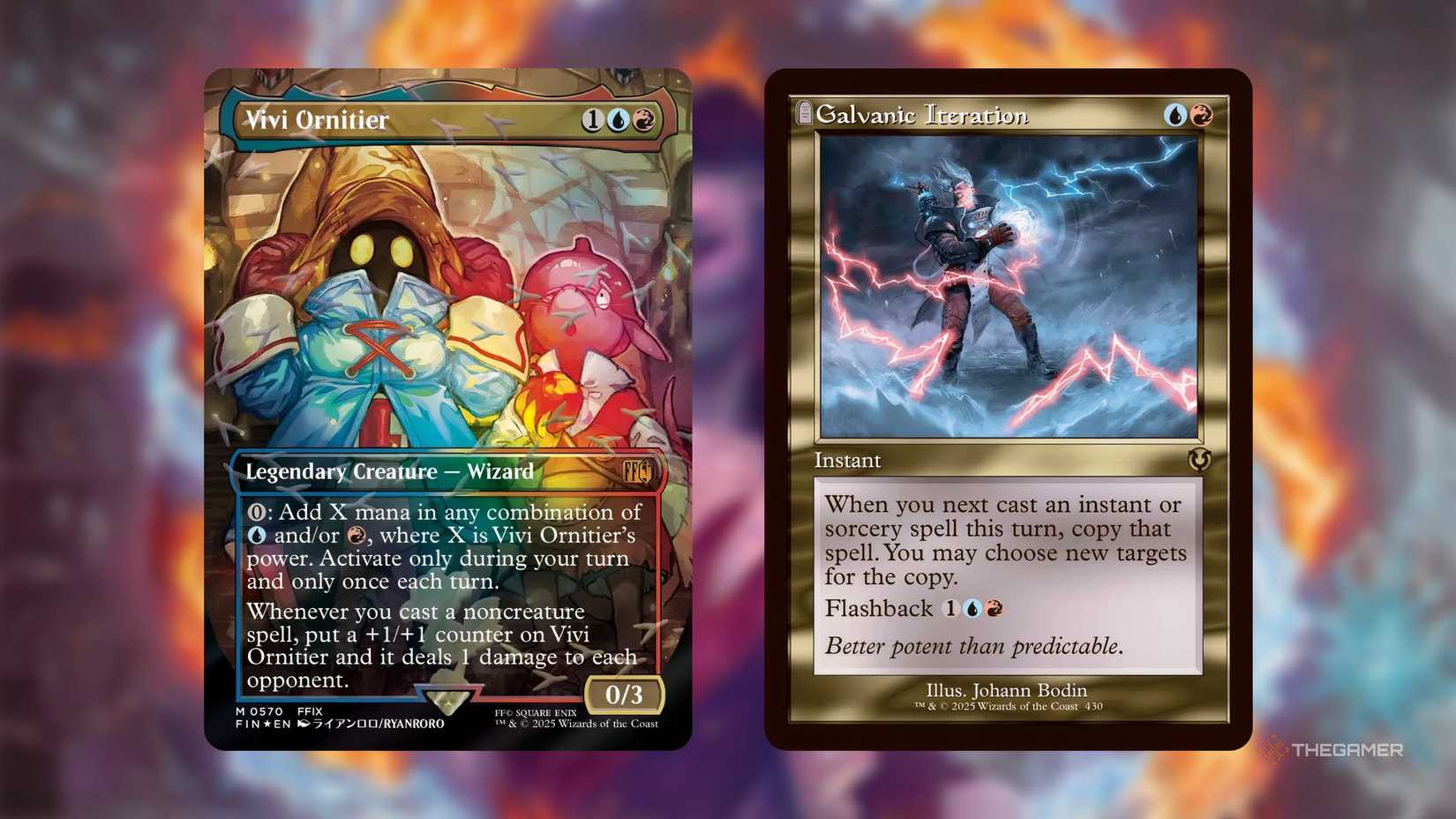
There is only one thing stopping Magic: The Gathering from sitting atop this list, and it’s the implementation of Universes Beyond sets into the Standard format. MTG’s primary competitive format is a bit of a mess right now, with far too many legal sets, many of which are Universes Beyond, which we were once promised would never be Standard legal.
Beyond this, 2026 is set to be a great year for original MTG sets, even if they are outnumbered three to four by Universes Beyond. Should this trend continue into 2027, we could realistically be looking at MTG dropping even further down this list. It’s a sore subject for many because when Wizards of the Coast is on form with original sets, it truly feels like the game has never been better, but these original sets are just too few and far between now.
MTG Arena is still an incredibly reliable digital platform and a great way to start playing Magic for free. Also, collectibility remains very strong for paper products, even if a little more variety is needed in card variants going forward.
For better or worse, legacy is keeping MTG high on this list, but the game has reached a very important crossroads, and where it goes from here will determine its fate in the short-to-mid term.
Pros
- Long pipeline of new products that are always impacting the meta game.
- Tons of formats so you can choose which era and budget suits you.
- History has shown WotC can navigate tough moments and find form again.
Cons
- Universes Beyond is on the verge of destroying Magic canon.
- Too many sets are legal in Standard.
- Licensed products outnumber original content in the 2026 schedule.
1
Pokemon TCG
Always Evolving

In 2025, there was no doubt that Magic: The Gathering was the premier TCG, but through its own missteps, it fell into second place, and despite not doing anything remarkable, Pokémon has taken the top spot through solid success and a continuous string of sets popular with its community.
The Pokémon gameplay is still incredibly solid, and the meta shifts have kept the competitive scene active and spicy, while the collectibility has never been better, whether you’re someone who just chases base sets or complete master sets.
It would take multiple monumental mistakes for Pokémon to be anything other than one of the best TCGs around, and right now in 2026, it’s head and shoulders above the contenders.
The biggest issue with Pokémon in 2026 is still availability and scalpers. Sadly, the popularity of Pokémon is such that people are always looking to profit from reselling sealed products once availability struggles kick in.
Pros
- Iconic old school Pokémon mixed with newer generations throughout sets make them fun to collect.
- A rich history to look back on if you want to collect older products.
- Gameplay is still as solid as ever and fun to play for all ages.
- Great digital platform across mobile and PC.
- Strong range of products from starter decks to Battle Academy, ETBs, and more.
Cons
- Master sets are expensive to complete.
- Availability is often a nightmare.

Magic: The Gathering – Every Universes Beyond Crossover, Ranked
Magic: The Gathering expands in extremely fun new ways with Universes Beyond.