

Cairn is about more than just climbing one of the tallest mountains in its fictional world. It’s a journey of personal regret, doubt, love, and taking another step into the unknown. It’s a lovingly crafted experience that is as deep in its systemic climbing mechanics as its narrative all about a woman who has spent years living her dream and now craves a return to normality.
While its voice acting can prove inconsistent and some of its mechanics unfortunately end up feeling underutilised, The Game Bakers have nevertheless crafted an impactful tale all about how far we are willing to push ourselves to feel something or prove doubters wrong. But more than that, it’s about the sacrifices people are willing to make in order to achieve true greatness.
There’s Always Gonna Be Another Mountain
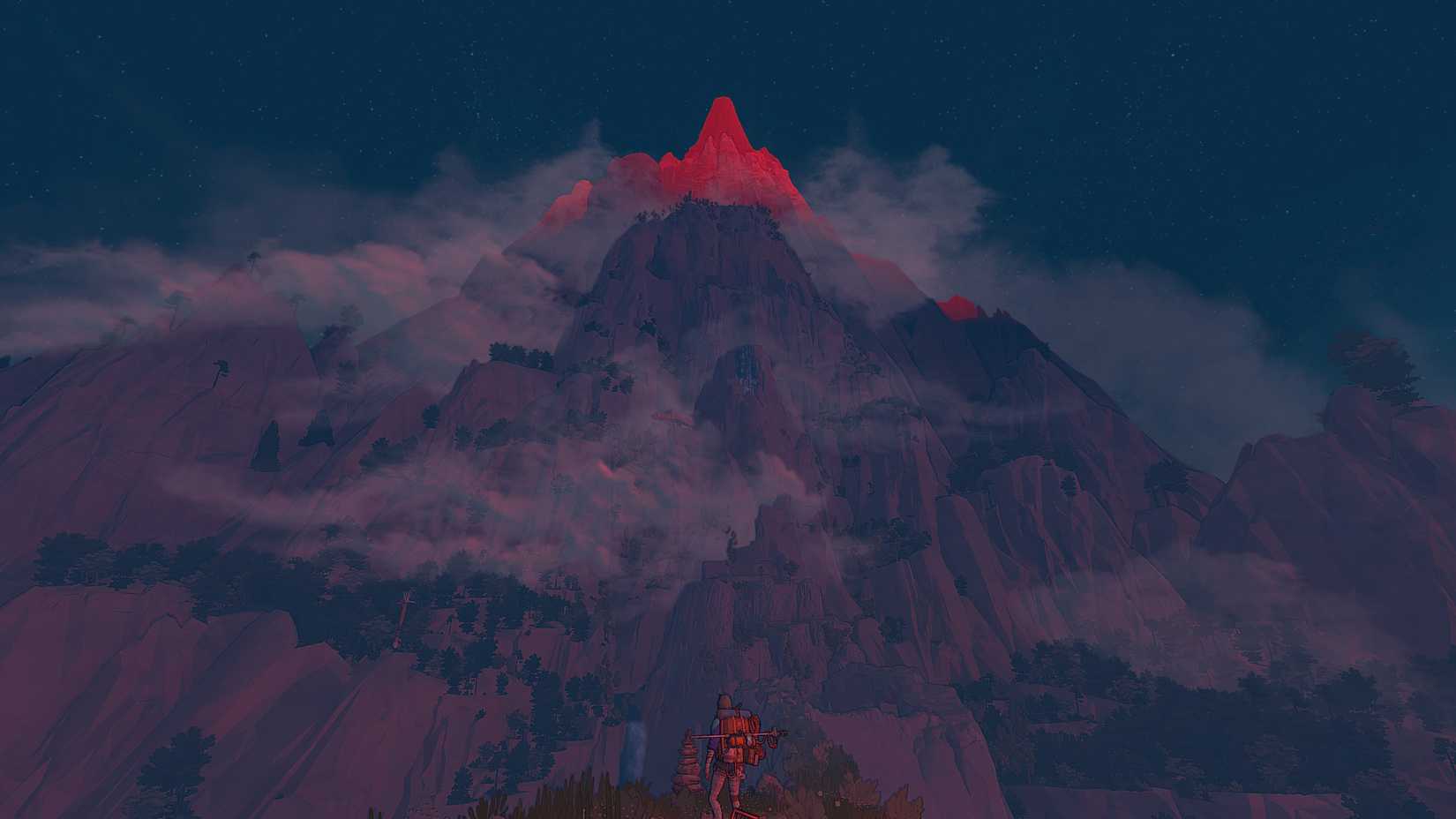
You play as Aava, an experienced mountain climber who has ascended the majority of iconic climbs around the world. All except Mount Kami, a dauntingly large peak that has claimed hundreds of lives in the past, the corpses of which you’ll stumble upon during your own ascent. Aava treats these like a sombre yet familiar sight, reminding her of the harsh reality of climbing mountains that were never meant to be truly conquered.
Despite this threat of death, Aava moves forward with quiet determination, a willingness to desperately fill an empty void in her life that rises to the surface throughout the narrative. In the early hours, her fame becomes evident as she tries to avoid calls from agents and sponsors pestering her for updates. If she reaches the top, it is going to be a very big deal, so, of course, her managers want to monetize the opportunity however possible. But Aava isn’t in this for fame or fortune, at least not anymore.
Aava is a pretty grumpy character, but this sharp personality is eventually whittled down the more she begins to contemplate the purpose of climbing Mount Kami.

Aava wants to reach the top of Mount Kami to feel something, to prove that this physical activity she has poured her entire personal and professional life into isn’t for nothing. Or perhaps she reached her own peak a long time ago, and is now in search of purpose. She wants a reason resonant enough to keep going or throw in the towel forever.
She is fearlessly apathetic towards her own mortality throughout the story before finally coming to realise there are people below who care about her, whether it be colleagues, partners, or family, regardless of the flaws they might carry. It acts as the perfect thematic companion to gameplay that is all about holding on tight until you have nothing left to give.
I’m Always Gonna Wanna Make It Move
Cairn is easy to learn, but incredibly hard to master. Aava climbs by approaching a vertical surface and pressing the Square/X button, and from here you can use the left thumbstick to move one limb at a time to holds that look like they can support your weight and crevices that can be clung onto without losing your grip and falling into oblivion. Aava can contort her body into some incredibly spider-esque positions, meaning the game often feels surprisingly unrealistic and forgiving at times, but I doubt it would be very much fun if she tried to mimic the truly unforgiving realism of mountain climbing. It strikes a great balance.
I found myself mimicking the movements I made while climbing Snowdon late last year as I gingerly placed my feet onto secure rock formations before gradually moving each limb one by one until it was safe to push forward. If Aava ever finds herself in a position where her weight isn’t evenly distributed or her centre of gravity is out of whack, she’ll run out of stamina and have no choice but to drop.

This is where pitons come in — pegs that can be driven into the mountain a handful of times during each climb to act as self-made checkpoints. If the path forward feels too treacherous, you can rappel down to the starting point and do it all over again.
Whenever I started at the bottom of an extensive climb, I would look up and ponder all the enormous tasks that awaited me, only to throw caution to the wind as I took that first step and did everything I could to keep moving forward. Time melts away during the hardest of climbs, your mind entering a state of flux thanks to each movement potentially being your last.
Cairn introduces just enough systems to manage alongside your stamina that you’re always feeling challenged, but never overwhelmed to the point of tedium. If I screwed up, chances are it was 100 percent my fault and I either needed to take a different route or be more prepared next time.
Always Gonna Be An Uphill Battle

Cairn isn’t just about correctly placing your limbs up a mountain for several hours though. Not only is this a robust climbing simulator, it’s also a survival game where your hunger, thirst, and overall body condition must be managed and taken into account at all times. If your thirst and hunger ends up hitting rock bottom in the middle of a climb, you are going to struggle, while injuries made during more dramatic falls are going to require rest and recuperation to treat. Death will throw you back to the nearest save point, represented by small windows in the mountain where you can set up camp to rest, sleep, and repair the tape on your bleeding hands.
Your tent is a place of brief, comforting respite. Aava is encouraged to cook a variety of meals using water gathered on the mountain, featuring staples like instant noodles and random things gathered in the game world ranging from fish to fauna. I tended to craft offerings that gave me the best stat buffs rather than potential taste, meaning my Aava became very fond of floral tea with absolutely no nutritional value. But it got the job done.

You retape your fingers using a wonderful minigame where the thumbstick is used to twirl tape around your bloody digits, offering a graphic visual idea of how far you’ve come.
A few hours into my playthrough, I find myself developing the mindset of a climber. I would scout out potential routes before setting up my tent for the night, ensuring I got up early in the morning to make the most of daylight before settling down after reaching a natural end point. It’s an effective routine that makes it feel like I’m always moving forward, while all the calls Aava receives from colleagues and loved ones remind us of everything our hero willingly leaves behind.
It’s consistently bittersweet, especially as Aava stumbles across an assortment of other characters who either recognise her or have called this mountain home for a very long time. It emerges early on that an ancient civilization used to live on this summit, and throughout their existence strived to leave it behind and discover a new world.
Sometimes I’m Gonna Have To Lose

While Aava craves solitude to empty her mind and contemplate her existence, she is often reminded of the value that comes from togetherness and not letting her achievements be the defining factor of your very being. Aava is more than just a world-famous climber, and it takes pushing herself to the very brink to realise that. Whenever I sat down to rest at many of the titular rock structures scattered across the game, I was constantly asking myself what this was all for. This experience would be just as satisfying without a strong yarn pulling it all together, which helps elevate The Game Baker’s latest effort to another level entirely.
Cairn is an immaculately executed marriage of narrative and mechanics that challenges you as much as it asks you to contemplate the meaning of this journey Aava embarks upon. It is similar to a pilgrimage of self-discovery I’ve found myself embarking on in recent months as part of me contemplates the achievements I’ve made throughout my life and where exactly I want to go next with my career, my identity, and my entire existence on this planet. If a single game can force me to have those kinds of internal conversations, it’s done something great.



- Released
-
January 29, 2026
- Developer(s)
-
The Game Bakers
- Publisher(s)
-
The Game Bakers
- Number of Players
-
Single-player
- Steam Deck Compatibility
-
Verified


- Climbing gameplay is satisfying, challenging, and unpredictable
- Visually arresting with a frequently striking sense of place
- ava is a strong and conflicted heroine who isn?t afraid to be unlikable
- Falling and losing an hour of progress is always going to suck
- Iffy voice acting can sometimes lessen the narrative?s impact